

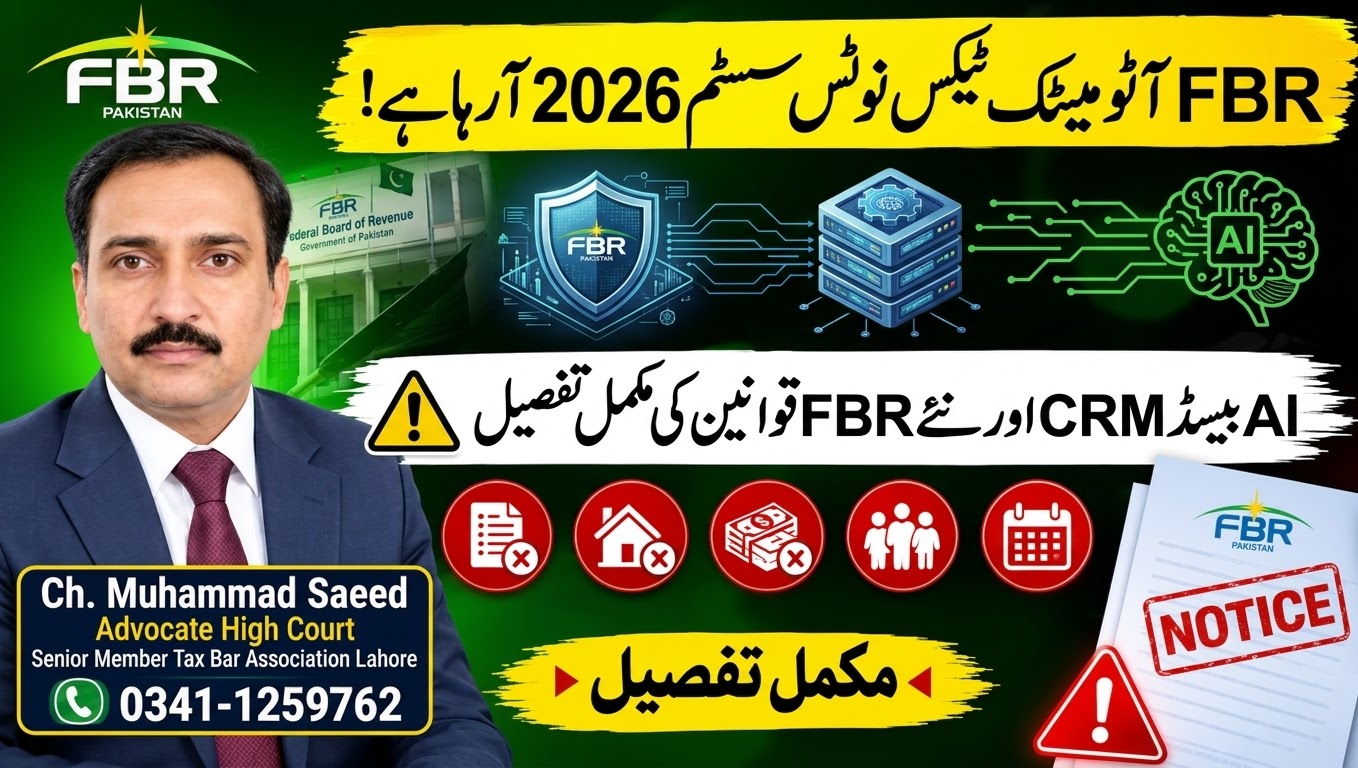
Discover how FBR’s AI-based Compliance Risk Management (CRM) system transforms tax notices in Pakistan, replacing manual selection with automated transparency.
Introduction
The Federal Board of Revenue (FBR) has recently issued a landmark document that significantly transforms the traditional system of issuing tax notices in Pakistan. For years, compliant taxpayers have faced the anxiety of receiving arbitrary tax notices generated through manual selection. The introduction of an automated, artificial intelligence-driven screening process aims to eliminate personal discretion and ensure greater transparency.
This transformation impacts Pakistani taxpayers, business owners, retailers, traders, accountants, and legal professionals alike. This article provides a comprehensive overview of how FBR’s new automated setup works, how it compares to the former manual selection method, key implementation deadlines, bar code verification features, and the strict conditions required for issuing any manual tax notice.
The Traditional Manual Tax Notice System
To appreciate the significance of the new automated system, it is essential to understand how the former manual process operated.
Under the old mechanism:
- Manual Selection: A Deputy Commissioner overseeing a specific jurisdiction would receive approximately 500 tax returns.
- Personal Discretion: The officer selected tax returns manually based purely on personal judgment and discretion.
- Issuance of Show Cause Notices: A show cause notice was issued simply with the officer’s signature, initiating lengthy legal proceedings for the taxpayer.
This process was simple and lacked rigorous automated checks, leaving taxpayers vulnerable to unnecessary audits and subjective decision-making.
What Is the New AI-Driven Compliance Risk Management (CRM) System?
FBR’s major structural shift revolves around an advanced, artificial intelligence-based automated system known as Compliance Risk Management (CRM).
Key features of the CRM system include:
- Automated Data Collection: Before any tax notice is issued, the AI system automatically gathers and checks the taxpayer’s return data to evaluate accuracy.
- Digital Screening: Human discretion is replaced by fully automated digital screening.
- Mandatory System Approval: Automated approval through CRM is now mandatory prior to the issuance of any tax notice.
This digital workflow is designed to eliminate human error and subjective decision-making from the notice selection process.
Comparison: Old Manual System vs. New Automated CRM System
| Feature | Old Manual System | New Automated CRM System |
|---|---|---|
| Selection Method | Manual selection by tax officers | Fully automated screening via AI |
| Basis of Selection | Personal discretion / judgment | Data verification via CRM rules |
| Notice Approval | Officer’s personal signature | Mandatory CRM system authorization |
| Risk of Personal Bias | High | Minimized through digital screening |
Legal Status of Unapproved Manual Notices
A primary concern among taxpayers is whether an officer can bypass the automated CRM system and manually issue a notice.
FBR has clarified the rule regarding non-compliant notices:
- Invalidity: Any notice that is not approved through the automated CRM system has no legal standing and is considered technically invalid.
- No Action Permitted: No tax proceedings or enforcement action can be legally taken against a taxpayer on the basis of an invalid, non-CRM-approved notice.
Implementation Timeline and Important Dates
The FBR has established a clear timeline regarding the applicability of the new CRM rules:
- Notices Issued Before August 31: All tax notices issued prior to August 31 remain legally valid and continue to be processed under the old procedure.
- Notices Issued From September 1 Onward: Every new tax notice issued on or after September 1 is legally required to follow the automated CRM process.
Verifying Notices via Bar Codes and CRM Markers
To assist taxpayers and the business community in confirming the authenticity of notices, future tax notices are expected to feature specific verification tools:
- Scannable Bar Codes / CRM Markers: Notices will include scannable bar codes or dedicated CRM markers.
- Instant Verification: Taxpayers can scan these markers to verify immediately whether the notice was generated legitimately through the automated system or issued outside the prescribed framework.
Exception Clause: Strict Procedure for Manual Notice Issuance
While the system is automated, a restricted pathway exists for manual intervention under exceptional circumstances where the AI system might fail to detect a severe issue:
- Proper Identification: The tax officer must formally identify the specific, genuine issue.
- Detailed Reporting: The officer must draft a comprehensive technical report explaining the necessity of a notice.
- High-Level Approval: The officer must obtain official approval directly from the Member level of the FBR.
Only after fulfilling these rigorous steps can a manual notice be legally issued.
Practical Impact on Taxpayers
If implemented according to its original design, the CRM policy provides significant benefits to compliant taxpayers:
- Peace of Mind: Honest taxpayers filing accurate tax returns in accordance with the law receive substantial relief.
- Reduction in Unnecessary Notices: Irrelevant and redundant tax notices are expected to decrease significantly.
- Protection Against Arbitrary Audits: Taxpayers gain protection from arbitrary, discretionary audits.
Frequently Asked Questions
Question 1: What is the main system introduced by FBR to automate tax notices? Answer: FBR has introduced an Artificial Intelligence-based automated system called Compliance Risk Management (CRM) to collect data, review tax returns, and approve notices digitally.
Question 2: What happens if a tax notice is issued without CRM approval after September 1? Answer: Any notice issued after September 1 that is not approved through the CRM system is considered technically invalid, holds no legal status, and cannot be used to take action against a taxpayer.
Question 3: How does the new system handle notices issued before August 31? Answer: Notices issued before August 31 remain valid and will be handled under the old process.
Question 4: How can taxpayers verify if a tax notice was generated by the AI system? Answer: Future notices are expected to carry scannable bar codes or CRM markers that allow taxpayers to scan and verify if the notice originated from the automated system.
Question 5: Can a tax officer still issue a manual notice under any condition? Answer: Yes, but only under a strict procedure. The officer must properly identify a genuine issue, prepare a detailed report, and obtain explicit approval from an FBR Member level official.
Conclusion
The introduction of the AI-driven Compliance Risk Management (CRM) system marks a fundamental shift in FBR’s tax administration framework. By replacing manual discretion with automated screening, requiring CRM authorization for notice validity, establishing a strict approval mechanism for manual exceptions, and introducing scannable verification markers, the new policy aims to protect compliant taxpayers from arbitrary audits and unnecessary legal friction.
Call to Action
Stay informed about the latest developments in Pakistani tax laws and legal procedures:
- Explore our related articles on Income Tax, Sales Tax, SECP, and FBR compliance.
- Subscribe to our YouTube channel for regular legal and tax updates.
- Leave your questions in the comments section below—we aim to address your queries in upcoming content.
Author & Service Information
Ch. Muhammad Saeed, Advocate High Court Senior Member High Court Bar Association Lahore
We are an association comprising:
- Lawyers
- Chartered Accountants
- Computer Engineers
- AI Experts
Services Provided:
- All legal matters regarding property disputes
- Income Tax
- Sales Tax
- Company Registration
- NTN Registration
- Refund claims
- SECP & FBR matters
Contact Information:
- Phone: 0341-1259762
- Email: msaeedadv86@gmail.com
- Sponsorships: Sponsors interested in promoting their products and services are welcome to contact us.