

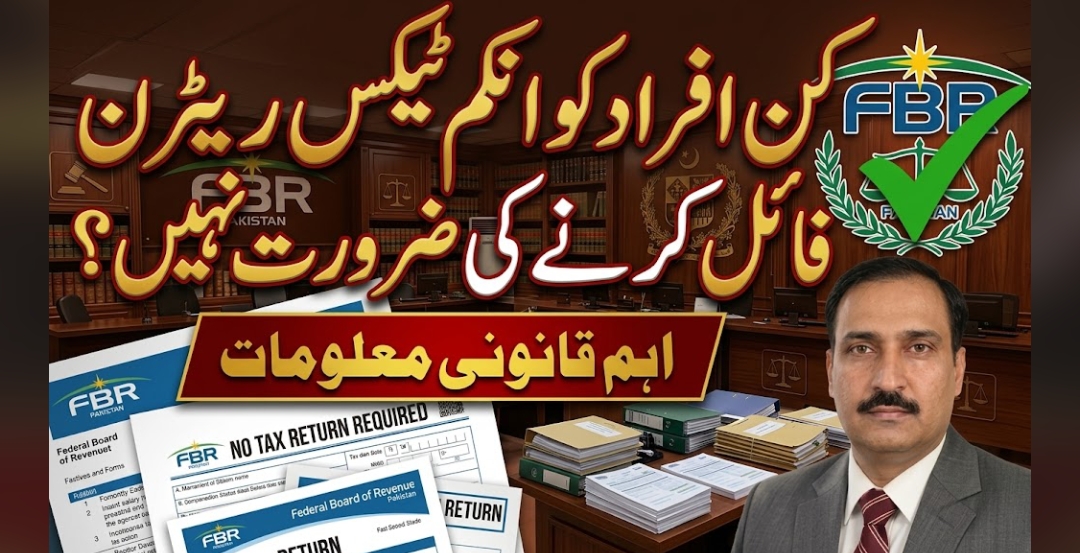
Many citizens in Pakistan believe that specific individuals—such as widows, orphans, and disabled individuals—are unconditionally exempt from receiving tax notices or filing income tax returns with the Federal Board of Revenue (FBR). However, receiving an FBR notice can cause significant concern, especially when the recipient has no personal income or active employment.
Understanding Pakistani tax laws, specifically the relationship between tax exemptions and registration conditions, is essential for every taxpayer. While the law provides exemptions under specific circumstances, registering a National Tax Number (NTN) or meeting certain financial criteria automatically creates a legal obligation to file an income tax return. This article explains the key provisions of the Income Tax Ordinance 2001, the six conditions that make tax filing mandatory, and the steps to take if you receive an FBR tax notice.
Under Section 115, Subsection 3 of the Income Tax Ordinance 2001, titled “Persons not required to furnish return of income,” the law identifies four specific categories of individuals who are generally not required to file a tax return:
- Widows
- Orphan children under the age of 25
- Disabled or special persons
- Non-residents, solely in relation to immovable property
In everyday scenarios, individuals falling into these categories—such as a widow who inherits or transfers property from her deceased husband without having a personal source of income—often assume they hold a absolute tax exemption. However, this statutory exemption is conditional rather than absolute.
How NTN Registration Cancels Tax Exemption
A primary reason widows, orphans, or disabled persons receive FBR notices is prior NTN registration.
When property transfers occur, property dealers or advisors frequently create an NTN for the property owner to obtain “filer” status. As soon as an NTN is issued in an individual’s name, the automatic exemption provided under Section 115, Subsection 3 comes to an end.
According to Section 114, Subsection 1 (b) of the Income Tax Ordinance 2001, holding an issued NTN legally binds an individual to file an annual income tax return. Consequently, even if a person has no active income, the presence of an active NTN creates a statutory requirement to submit a tax return to the FBR.
Six Conditions That Make Tax Return Filing Mandatory
Regardless of whether an individual is a widow, an orphan, or a disabled person, the law specifies six conditions. If even one of these conditions applies to an individual, filing an income tax return becomes compulsory:
- Annual Taxable Income: Having a yearly taxable income exceeding PKR 600,000.
- Prior Tax Charge: Having been charged any tax within the last two tax years.
- NTN Issuance: Having an NTN issued in your name.
- Utility Connections: Owning or holding a commercial or industrial electricity meter.
- Professional & Trade Membership: Holding membership in a Chamber of Commerce, trade association, bar council, Pakistan Medical and Dental Council (PMDC), or Pakistan Engineering Council (PEC).
- Business Loss: Carrying forward any business loss.
Additionally, holding specific assets—such as owning a vehicle with an engine capacity larger than 1000cc or owning a plot larger than 500 square yards—also makes tax return filing mandatory.
Tax Filing Rules for Overseas Pakistanis
Overseas Pakistanis living abroad often assume that the FBR has no jurisdiction over them. However, specific rules apply regarding Pakistan-source income:
- Exemptions: Overseas Pakistanis who hold a National Identity Card for Overseas Pakistanis (NICOP) or Pakistan Origin Card (POC) and maintain a Roshan Digital Account or a foreign currency account in a Pakistani bank qualify for specific exemptions.
- Mandatory Filing: If an overseas Pakistani earns rental income in Pakistan (such as renting out a shop or house) or participates in a local business partnership, filing an income tax return under Pakistan-source income becomes mandatory.
Additional Assets and Property Thresholds
Under current tax regulations, absolute or blind exemptions no longer exist. Aside from income level and NTN registration, taxpayers must review their asset holdings. Tax returns must be submitted if an individual:
- Has an NTN issued in their name.
- Owns a motor vehicle larger than 1000cc.
- Owns an immovable property or plot exceeding 500 square yards.
Practical Guidance: Responding to FBR Notices
Ignorance of the law is not accepted as a valid legal defense. If you or a family member receive a notice from the FBR:
- Avoid Unqualified Advice: Do not rely on informal advice from property dealers or non-professionals.
- Consult a Professional: Seek assistance from a professional tax lawyer or qualified tax consultant.
- Prevent Penalties: Timely legal advice and proper compliance can protect taxpayers from incurring fines ranging from thousands to millions of rupees.
Frequently Asked Questions
Question 1: Are widows completely exempt from filing tax returns with the FBR?
Answer: No. While Section 115(3) of the Income Tax Ordinance 2001 lists widows as persons not required to file a return, this exemption ends if an NTN has been created in their name or if they meet any of the mandatory filing conditions under tax law.
Question 2: What happens if an NTN was created just to transfer a plot?
Answer: Once an NTN is issued, Section 114(1)(b) binds the holder to file an income tax return. The exemption under Section 115 is no longer applicable once an NTN exists.
Question 3: What are the primary criteria that make tax return filing mandatory?
Answer: Filing is mandatory if you have an annual taxable income over PKR 600,000, were charged tax in the last two years, possess an NTN, have a commercial or industrial electricity meter, hold membership in a professional body or trade association (such as a Bar Council, PMDC, or PEC), or carry forward a business loss.
Question 4: Do overseas Pakistanis have to file tax returns in Pakistan?
Answer: Overseas Pakistanis holding a NICOP or POC with a Roshan Digital Account or foreign currency account get specific exemptions. However, if they earn Pakistan-source income—such as local rental income or income from a local business partnership—filing a tax return is mandatory.
Question 5: Does owning property or a vehicle require a person to file a tax return?
Answer: Yes. Owning a vehicle with an engine capacity greater than 1000cc or an immovable plot larger than 500 square yards makes tax return filing mandatory.
Conclusion
Pakistani tax law does not provide absolute or blind exemptions to any category of citizens. Although Section 115, Subsection 3 of the Income Tax Ordinance 2001 grants conditional relief to widows, orphans under 25, disabled individuals, and non-residents regarding immovable property, this relief ceases as soon as an NTN is issued or any mandatory condition is met. Understanding these legal provisions, maintaining updated tax affairs, and seeking advice from qualified professionals ensures compliance and prevents costly financial penalties.
Professional Contact Information
Ch. Muhammad Saeed, Advocate High Court Senior Member High Court Bar Association Lahore
Association Team: Lawyers, Chartered Accountants, Computer Engineers, and AI Experts
Services Offered:
- Legal matters regarding property disputes
- Income Tax and Sales Tax
- Company Registration and NTN Registration
- Refund claims
- SECP & FBR matters
Contact Details:
- Phone: 0341-1259762
- Email: msaeedadv86@gmail.com
- Sponsorships: Open for product and service promotion inquiries.