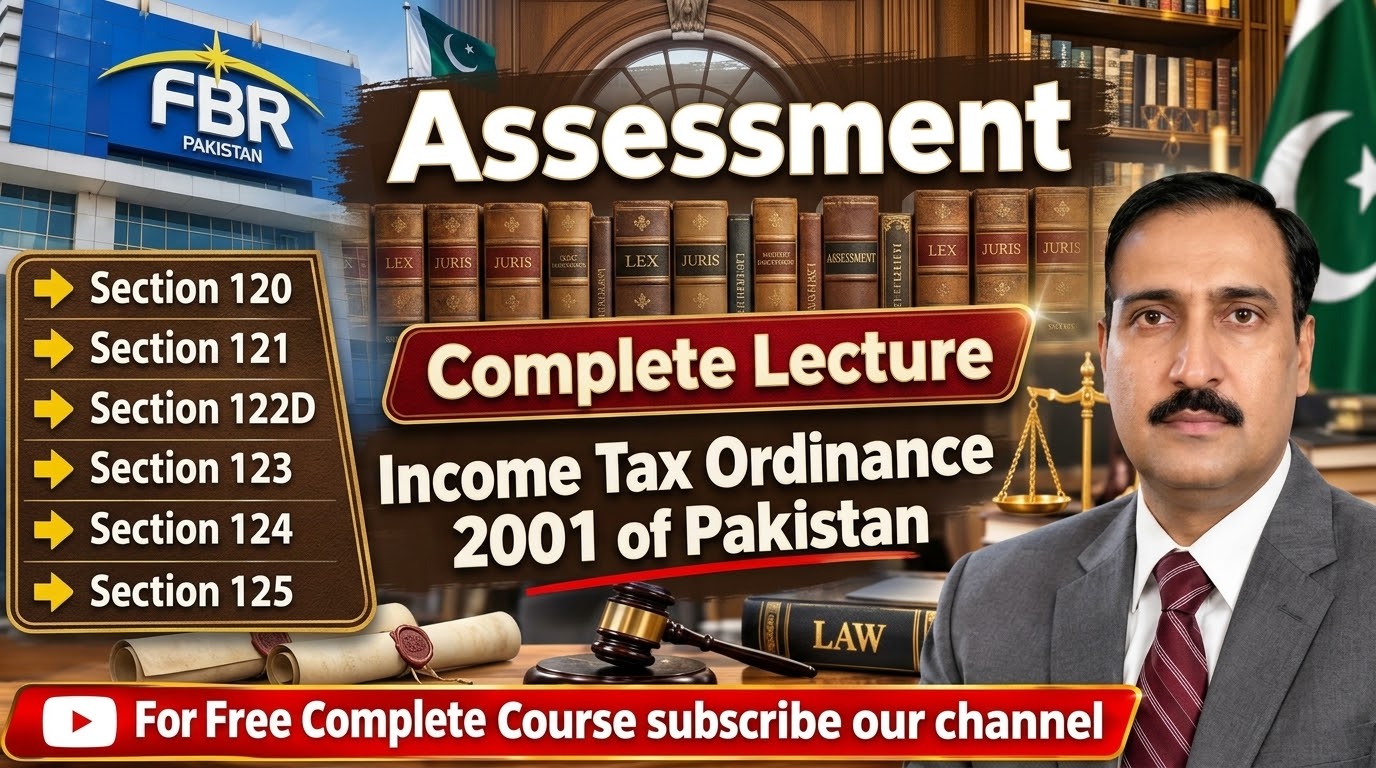
Navigating the Federal Board of Revenue (FBR) regulations can feel overwhelming, but understanding the fundamentals of tax assessment is crucial for every Pakistani taxpayer. Whether you are a small business owner, a shopkeeper, or an individual filing an income tax return, knowing how the FBR evaluates your submission empowers you to protect your rights. This guide simplifies the rules laid out in Sections 120 through 125 of the Income Tax Ordinance 2000. It explains when the FBR can issue notices, when assessments are automatically accepted, and how you can handle disputes effectively.
What Is FBR Tax Assessment?
When you file your income tax return in Pakistan, the FBR reviews it to ensure accuracy and compliance. This process is governed by specific sections of the Income Tax Ordinance 2000, dictating how your tax liability is determined, amended, or disputed.
Normal Assessment (Section 120)
Under Section 120, the process typically begins smoothly. When you file your return, the FBR system generally accepts it automatically. This is known as a normal assessment.
However, if the Commissioner identifies any discrepancies or shortcomings in your return, they have the authority to issue a notice. This notice must be issued within 180 days after the end of the financial year.
Best Judgment Assessment (Section 121)
What happens if you fail to file a tax return entirely? This triggers Section 121, known as Best Judgment Assessment.
In this scenario, the Commissioner steps in to determine your tax liability themselves. They will use whatever information is available to them to calculate what you owe. The FBR has a five-year window to make this assessment.
Amendment of Assessment (Section 122)
Section 122 deals with the amendment of previous tax orders. If the FBR discovers concealed income or identifies false expenses claimed in your return, the Commissioner can amend the prior assessment order.
Similar to Section 121, this amendment can be made within a five-year period. Importantly, the law ensures the taxpayer is given a fair opportunity to be heard. Before finalizing the amendment, the FBR must issue at least three notices, with a mandatory gap of 15 days between each notice. If you wish to resolve disputes amicably, you can also request agreed assessments under this framework.
Provisional Assessment (Section 123)
Section 123 is activated by the discovery of undeclared properties. If the FBR finds assets that have not been disclosed, the Commissioner issues a provisional assessment order.
Once this order is issued, the taxpayer is given exactly 30 days to submit a reply. It is crucial to note an important exclusion here: assets that were properly declared and taxed under the 2019 amnesty scheme are protected and no further proceedings will be initiated against them.
Reassessments & Disputed Properties (Sections 124 & 125)
Sections 124 and 125 cover situations involving legal disputes and reassessments.
If a taxpayer appeals a decision and the Appellate Tribunal or High Court rules in their favor, the Commissioner is required to execute a new, corrected order within one year.
Additionally, if a property is currently embroiled in a civil court dispute, its tax assessment is suspended. The FBR will not finalize the tax assessment on that specific property until the civil court delivers its final verdict.
The Importance of Compliance
Understanding these regulations—specifically Sections 120 to 125 of the Income Tax Ordinance 2000—is highly beneficial for every citizen. Filing your tax return on time helps you avoid severe complications like Best Judgment Assessments (Section 121) and Amendment in Assessments (Section 122).
If you do receive an FBR notice, knowing the rules allows you to claim your rights effectively and handle disputes legally. Always ensure you respond to notices promptly, paying close attention to critical deadlines like the 180-day window for normal assessments or the 30-day response period for provisional orders.
7. Frequently Asked Questions
Question: What happens when I file my income tax return? Answer: Under Section 120, the FBR system generally accepts your filed return automatically. However, the Commissioner can issue a notice within 180 days of the financial year’s end if they find any deficiencies.
Question: What if I do not file an income tax return at all? Answer: Under Section 121 (Best Judgment Assessment), the Commissioner will determine your tax liability based on available information within a five-year period.
Question: Can the FBR change a previous tax assessment? Answer: Yes, under Section 122, if the Commissioner finds concealed income or false expenses, they can amend a previous order within five years. They must provide you a hearing by issuing at least three notices with a 15-day gap between them.
Question: How does the FBR handle undeclared property? Answer: Under Section 123, the Commissioner issues a provisional assessment order for undeclared property. You then have exactly 30 days to reply.
Question: Are assets declared in the 2019 amnesty scheme safe from provisional assessment? Answer: Yes, assets that were properly declared and taxed during the 2019 amnesty scheme face no further proceedings under Section 123.
Question: What happens to the tax assessment of a property involved in a civil court case? Answer: According to Sections 124 and 125, the tax assessment for a property involved in a civil court dispute remains suspended until the final decision of the court is announced.
8. Conclusion Understanding the framework of FBR tax assessments under Sections 120 to 125 is essential for navigating Pakistan’s tax landscape. From the automatic acceptance of normal returns to the stringent rules of best judgment and provisional assessments, knowing these rules equips you to manage your business better. By meeting deadlines and knowing your legal rights when responding to notices, you can avoid unnecessary complications and resolve disputes effectively.
9. Professional Author/Contact Information
Ch. Muhammad Saeed, Advocate High Court Senior Member High Court Bar Association Lahore Our association of lawyers, chartered accountants, computer engineers, and AI experts provides services in all legal matters regarding property disputes, income tax, sales tax, company registration, NTN registration, refund claims, SECP, and FBR matters. Phone: 0341-1259762 Email: msaeedadv86@gmail.com